Food safety is something everyone relies on, whether you’re eating at a restaurant, buying groceries, or preparing meals at home.
That’s why many people search for HACCP meaning after seeing the term on food packaging, restaurant documents, training courses, or food industry certifications.
Understanding HACCP helps you know how food businesses prevent contamination and keep food safe.
Quick Answer Box
| Topic | Answer |
|---|---|
| Meaning | A food safety management system that identifies and controls hazards. |
| Full Form | Hazard Analysis and Critical Control Points |
| Pronunciation | HAS-up (/ˈhæs.ʌp/) |
| Category | Food Safety |
| Tone | Professional and Technical |
| Used On | Food factories, restaurants, catering businesses, schools, hospitals, and food regulations |
| Difficulty Level | Beginner to Intermediate |
| One-Line Definition | HACCP is a preventive system used to identify, evaluate, and control food safety hazards before they become a problem. |
What Does HACCP Mean?
HACCP stands for Hazard Analysis and Critical Control Points.
It is an internationally recognized food safety system designed to prevent food contamination instead of reacting after problems occur.
Rather than relying only on testing finished food products, HACCP focuses on identifying possible risks throughout the food production process and controlling them before they affect consumers.
In simple words:
HACCP is a step-by-step system that helps make food safe to eat.
Breaking Down the Full Form
Understanding each word makes HACCP much easier to remember.
| Word | Meaning |
|---|---|
| Hazard | Anything that could make food unsafe, such as bacteria, chemicals, or physical objects. |
| Analysis | Looking for possible risks during food production. |
| Critical | The most important points where hazards can be controlled. |
| Control | Taking action to prevent or reduce hazards. |
| Points | Specific stages in the food preparation or manufacturing process. |
Together, these ideas create a complete food safety plan.
Why Is HACCP Important?
Food can become unsafe at many stages, including:
- Growing
- Harvesting
- Transporting
- Processing
- Cooking
- Packaging
- Storage
- Serving
HACCP helps businesses find risks before they become dangerous.
Benefits include:
- Reduces foodborne illnesses
- Improves food quality
- Meets legal food safety requirements
- Builds customer trust
- Reduces waste
- Makes inspections easier
- Protects a company’s reputation
The Seven Principles of HACCP
The HACCP system is built on seven internationally accepted principles.
| Principle | Purpose |
|---|---|
| 1. Conduct Hazard Analysis | Identify possible hazards. |
| 2. Determine Critical Control Points (CCPs) | Find where hazards can be controlled. |
| 3. Establish Critical Limits | Set safe limits such as cooking temperatures. |
| 4. Monitor CCPs | Check that safety limits are met. |
| 5. Establish Corrective Actions | Decide what to do if something goes wrong. |
| 6. Verify the System | Confirm the HACCP plan is working. |
| 7. Keep Records | Document inspections, temperatures, and actions taken. |
These principles work together to create a preventive food safety system.
What Is a Critical Control Point (CCP)?
A Critical Control Point (CCP) is a step where food safety hazards can be prevented, removed, or reduced to a safe level.
Examples include:
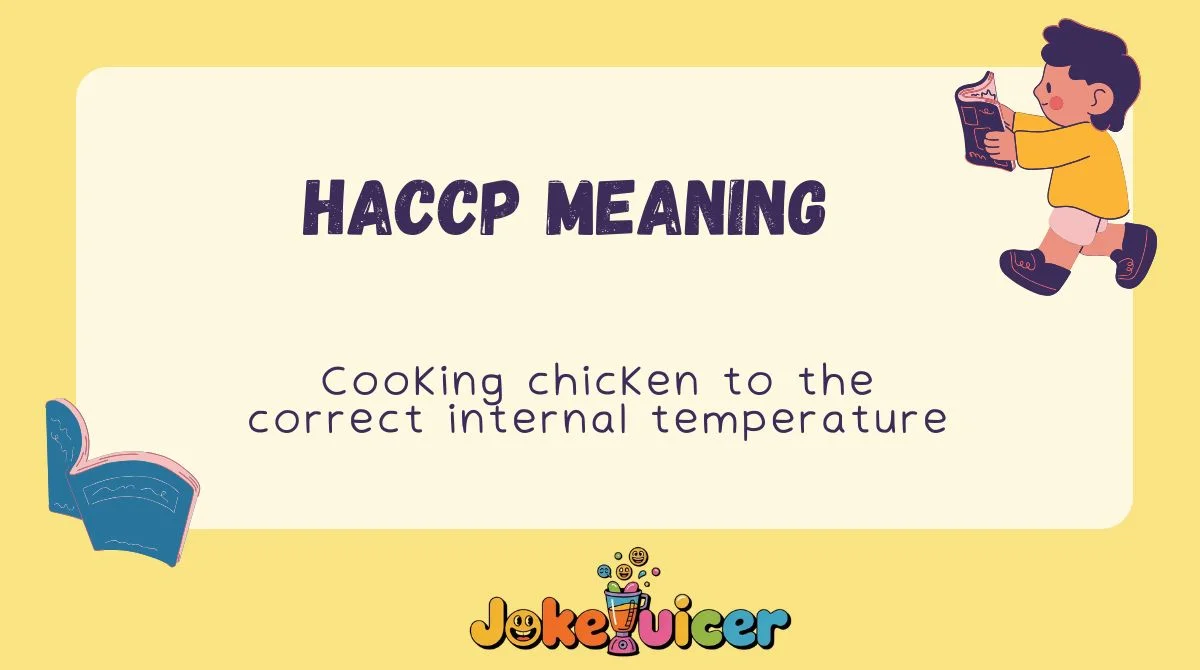
- Cooking chicken to the correct internal temperature
- Chilling dairy products quickly
- Checking refrigeration temperatures
- Metal detection during food manufacturing
Missing a CCP can increase the risk of unsafe food reaching consumers.
Types of Food Hazards HACCP Controls
HACCP focuses on three main hazard categories.
Biological Hazards
These involve harmful living organisms.
Examples:
- Salmonella
- E. coli
- Listeria
- Norovirus
- Mold
Chemical Hazards
These include harmful substances.
Examples:
- Cleaning chemicals
- Pesticides
- Food allergens
- Excess food additives
Physical Hazards
These are unwanted objects that may enter food.
Examples:
- Glass
- Plastic
- Metal fragments
- Stones
- Wood pieces
Where Is HACCP Used?
HACCP is used throughout the food industry.
Common places include:
- Restaurants
- Cafés
- Hotels
- Food factories
- Bakeries
- Meat processing plants
- Seafood businesses
- Dairy companies
- School cafeterias
- Hospitals
- Airline catering
- Food delivery kitchens
Many countries require food businesses to follow HACCP-based food safety systems.
Real-Life Example of HACCP
Imagine a restaurant preparing grilled chicken.
Possible hazards:
- Raw chicken contains harmful bacteria.
- The chicken may not cook fully.
- It could be stored at an unsafe temperature.
Using HACCP:
- Identify the hazard.
- Set a safe cooking temperature.
- Measure the temperature with a thermometer.
- Continue cooking if the temperature is too low.
- Record the results.
This process greatly reduces the chance of serving unsafe food.
Everyday Conversation Examples
Example 1
Manager: “Have we updated our HACCP records today?”
Employee: “Yes, all refrigerator temperatures have been logged.”
Explanation: The conversation refers to monitoring food safety procedures.
Example 2
Chef: “Check the HACCP plan before preparing seafood.”
Cook: “I’ll review today’s control points first.”
Explanation: The chef wants to ensure safety procedures are followed before food preparation.
Example 3
Student: “What does HACCP mean?”
Teacher: “It stands for Hazard Analysis and Critical Control Points, a system used to keep food safe.”
Explanation: This is a simple educational explanation.
HACCP vs Food Safety
People sometimes think these terms mean the same thing, but they are different.
| HACCP | Food Safety |
|---|---|
| A structured prevention system | A broad goal of keeping food safe |
| Uses seven principles | Includes hygiene, sanitation, regulations, and training |
| Focuses on hazards and control points | Covers all food handling practices |
| Used to prevent contamination | Overall result of safe food practices |
HACCP vs GMP
Another common comparison is HACCP versus Good Manufacturing Practices (GMP).
| HACCP | GMP |
|---|---|
| Prevents specific hazards | Establishes basic operating standards |
| Risk-based | Practice-based |
| Identifies Critical Control Points | Covers cleanliness, equipment, and employee hygiene |
| Builds on GMP | Forms the foundation for HACCP |
Who Needs to Know About HACCP?
HACCP knowledge is valuable for:
- Food handlers
- Restaurant employees
- Chefs
- Food manufacturers
- Quality assurance teams
- Food inspectors
- Catering businesses
- Hospitality students
- Public health professionals
Even consumers benefit from understanding how safe food is produced.
Common Misunderstandings About HACCP
“HACCP is only for factories.”
Not true. Restaurants, cafés, bakeries, and catering companies also use HACCP principles.
“HACCP guarantees food is always safe.”
No system can remove every risk. HACCP greatly reduces risk when followed correctly.
“Only large companies need HACCP.”
Small food businesses often use HACCP or HACCP-based food safety plans as well.
Frequently Asked Questions
What does HACCP stand for?
HACCP stands for Hazard Analysis and Critical Control Points.
What is the main purpose of HACCP?
Its purpose is to identify, prevent, and control food safety hazards before they affect consumers.
Is HACCP legally required?
Requirements vary by country and type of food business. Many food regulations require HACCP or HACCP-based systems.
Is HACCP only for restaurants?
No. It is used across the food industry, including manufacturing, catering, schools, hospitals, and food processing plants.
Why is HACCP better than only testing finished food?
Testing finished products may miss hidden hazards. HACCP prevents problems during production instead of finding them afterward.
Is HACCP difficult to learn?
The basic concepts are straightforward. Most people can understand the fundamentals with basic food safety training.
Conclusion
HACCP means Hazard Analysis and Critical Control Points, a preventive food safety system used worldwide to reduce the risk of contamination.
Instead of waiting for problems to appear, HACCP identifies hazards early and controls them at the most important stages of food production.
Whether you’re a student, food worker, business owner, or curious consumer, understanding HACCP helps you appreciate how safe food reaches your table and why preventive food safety matters every day.

Alex Parker is a humor writer who loves crafting clever puns and lighthearted jokes that make people smile.